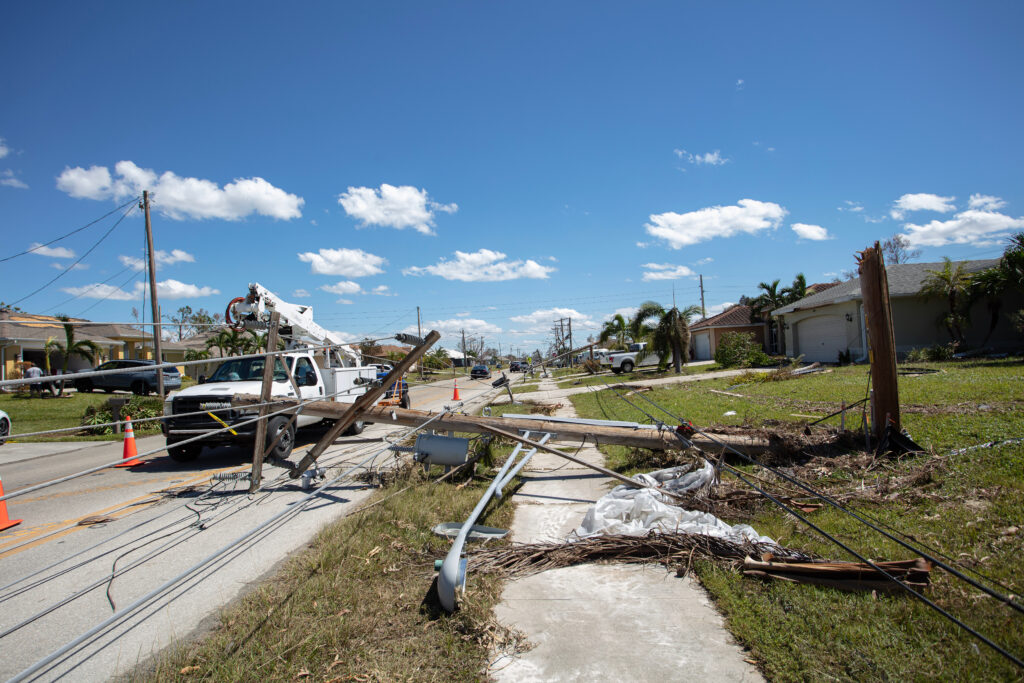
A lineman steps toward a transformer bank on a job the morning tailgate called routine. The permit says the equipment is de-energized. A switching error no one caught says otherwise. He has roughly one second.
That one second is the gap electrical hazard detection is built to close. Between 2011 and 2024, 2,070 workers died from electrical contact on the job, and unexpected contact with energy accounted for one in five of those fatalities (ESFI, BLS). Those incidents are not the ones the permit anticipated. They are the ones the permit missed.
Most utility electrical safety programs investigate that gap after the fact and rewrite procedures. Investigation and procedure are necessary. They are not the same as detection.
Why Your Current Electrical Safety Program Starts One Step Too Late
LOTO protocols, arc flash risk assessments, PPE ratings, and safe-approach distances are the foundation of any serious electrical safety program. They work. But they share one structural weakness: they depend on every hazard being correctly identified before work begins.
That assumption fails constantly. Switching errors. Outdated equipment labels. Contractors unfamiliar with site-specific conditions. Energized equipment not flagged on the permit. According to the Electrical Safety Foundation International, the utility industry had the highest rate of electrical fatalities of any U.S. sector between 2011 and 2024, at 0.75 deaths per 100,000 workers. Those incidents are not edge cases. They are the documented failure mode of programs that rely on pre-job control alone.
NFPA 70E requires arc flash risk assessments before energized work, and OSHA 1910.269 references it as recognized safe practice. But a risk assessment conducted before crews arrive cannot account for what changes after they are on site. Electrical infrastructure is dynamic. Human error is constant. The space between documented hazards and actual field conditions is where most electrical incidents happen.
Unexpected contact with energy accounted for one in five workplace electrical fatalities between 2011 and 2024.
How Wearable Electrical Hazard Detection Closes the Gap
Electrical hazard detection is a real-time proximity warning system. Worn on the helmet brim, where it can alert through audio, visual, and haptic signals, it warns the worker when they approach an energized source, regardless of what the permit says, and logs the event in the supervisor's view. It does not replace PPE or lockout/tagout. It runs in parallel, adding an active information layer while the worker moves through the field.
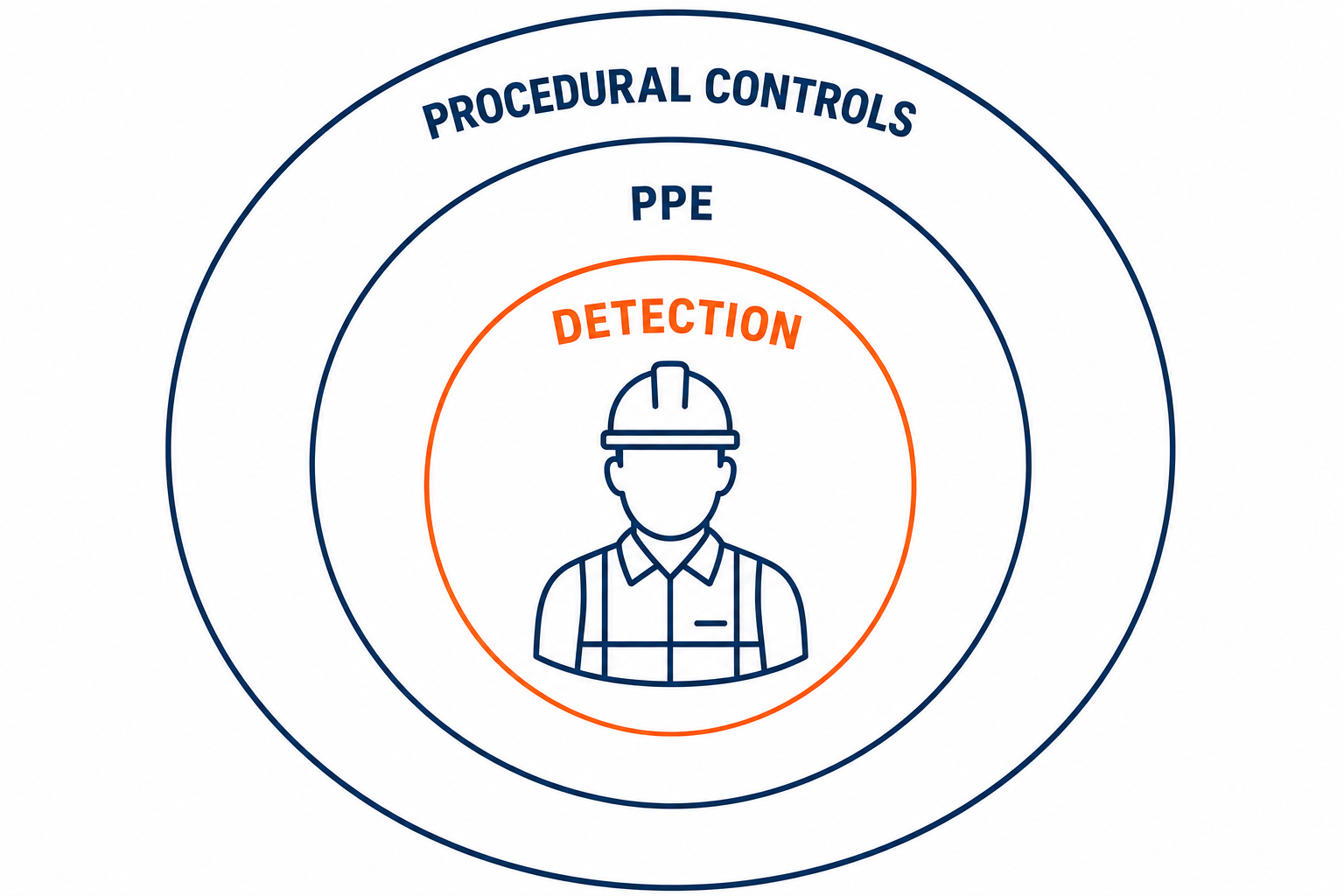
A wearable that detects electrical field presence can warn a worker approaching a hazard they did not identify. That warning creates an opportunity to stop, verify, and call it in. Without the warning, that opportunity does not exist.
It does not guarantee an incident will not happen. No honest vendor makes that claim. Compass is a secondary detection method, not a replacement for safe work practices, and detection distances vary with conditions like conductor exposure, elevation, humidity, and shielding. What it does is hand both the worker and their supervisor one more actionable input at exactly the moment when procedural controls have already failed.
What the Alert Means for the Worker Wearing the Device
If you are a crew lead or field technician, here is what happens when an electrical hazard detection alert fires on a Compass Pro™ device:
- The device alerts you with audio, visual, and haptic signals, and the alerts grow more urgent and frequent as you get closer to the source. RED indicates voltage. BLUE indicates current.
- You stop. You do not proceed. You verify with your supervisor.
- The verification is logged. Time, location, and acknowledgment are timestamped in the Navigator platform.
This is not a surveillance tool. It is one piece of information delivered at the moment you need it most: there may be something live here. Crews running Compass Pro consistently report it builds confidence, not anxiety, because it confirms when a work zone is clear and flags when it is not.
What the Supervisor Sees When an Alert Fires
An alert that only registers on the worker's device and never reaches a supervisor is a missed opportunity. The Navigator® platform logs every hazard detection event with timestamp, GPS coordinates, and worker ID. When an alert fires, the supervisor's dashboard surfaces it in real time, with crew location, time of alert, and whether the worker has acknowledged it.
That information does three things at once:
- It enables real-time response. The supervisor can make contact immediately and direct next steps.
- It creates an auditable record of every alert, acknowledgment, and outcome, supporting OSHA documentation and internal incident review.
- It surfaces patterns over time. Repeated alerts in a specific work zone flag a hazard condition worth investigating before someone gets hurt.
Why EHS Leaders Are Investing in Electrical Hazard Detection
If you run the safety program, the question is not whether detection technology is perfect. It is whether your current program gives field workers any awareness layer between the permit and the conductor.
For most utility safety programs, the answer is no. Your crews rely on procedure and PPE to protect them from hazards the procedure missed. When something goes wrong, you are investigating an incident instead of explaining why an alert went unaddressed.
Detection technology gives you something a procedural program cannot: documented proof your safety system was active and functioning at the moment of exposure. That is a different category of safety record. It is the kind you can show your leadership team, your insurance carrier, and your regulator.
Those numbers reflect what happens when a worker, a supervisor, and a connected system share the same information at the same moment.
In a field where missing one input is permanent, that input is worth having.
The window LOTO and PPE leave open is real. Detection does not close it completely. But it hands the worker and the supervisor one more input before the event. Built for leaders who refuse to accept preventable injuries.
What Buyers Actually Ask About Electrical Hazard Detection
Both detect voltage and current and alert on proximity. Compass Core™ is the field-ready baseline device, suited for organizations standardizing on awareness-level protection. Compass Pro adds the Emergency Response System: automatic impact, fall, and arc flash detection, a no-movement escalation after a detected event, an SOS button, and the full Navigator integration. If you need supervisor-side visibility and incident response in the same system, Compass Pro is the configuration to evaluate.
Compass Pro uses adjustable sensitivity settings calibrated to the work environment, including transmission substations and proximity to overhead lines. Field deployments at investor-owned utilities have configured the device for live-line work zones without triggering nuisance alerts in adjacent areas. Your Safeguard implementation specialist tunes sensitivity during onboarding and adjusts based on the first two weeks of field data.
A standard rollout runs 30 to 60 days from kickoff to full field activation. That includes device provisioning, Navigator platform configuration, supervisor training on the dashboard and SOS workflow, and one full week of supervised use with a pilot crew before broader rollout. For 200 workers, most utilities split deployment across two or three crews to surface site-specific issues early.
Yes. Navigator exports event data, including alert type, GPS, timestamp, and acknowledgment status, in formats that integrate with common incident management and asset management platforms. Talk to your Safeguard representative about your specific stack before procurement so the data pipeline is scoped into the implementation plan, not bolted on afterward.