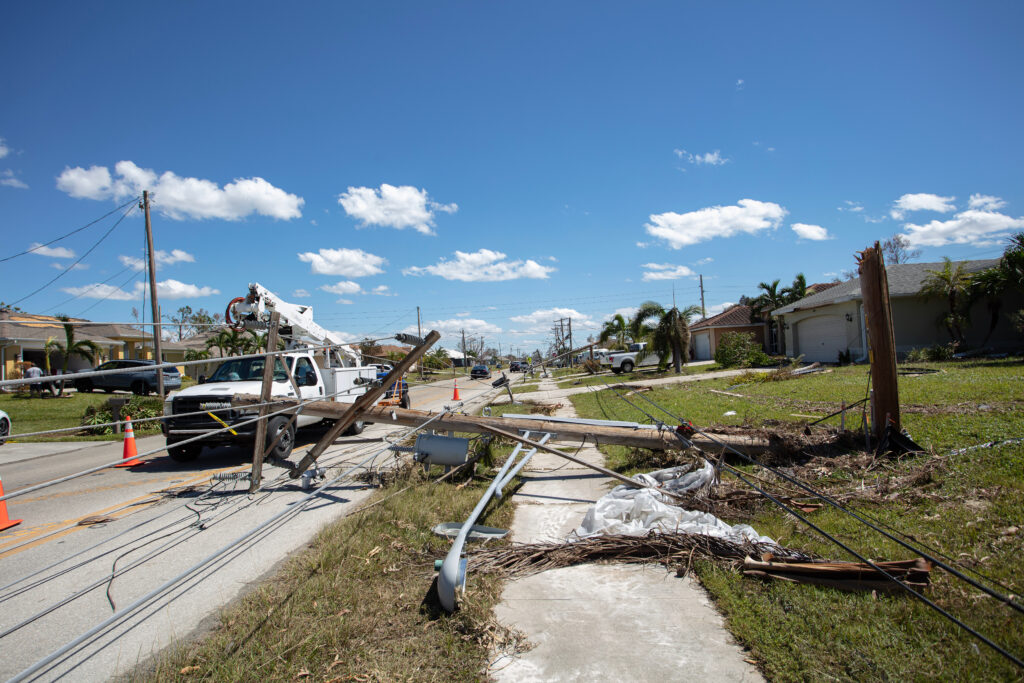
It is 2 a.m. on day three of a major storm response. A safety director has 40 workers deployed across 12 active work zones. Twenty are her own employees. Twenty are contractors from three different out-of-state utilities. She has not heard from one of those contractor crews in two hours. The cell repeater covering that grid is down. Her last known location for them is three miles inside a debris field.
That is the operating reality of utility mutual aid. After Hurricane Florence in 2018, more than 40,000 workers from the U.S. and Canada mobilized for restoration. Hurricane Michael drew more than 35,000 workers from at least 27 states. Most arrived in terrain they had never seen, on equipment they had never touched, alongside crews they met that morning.
The restoration is a remarkable operational achievement. Storm restoration worker safety, protecting mutual aid crews in unfamiliar territory with degraded communications and compressed timelines, is one of the most complex challenges any safety leader will face. Most utility safety programs were never designed for it.
What Changes When the Storm Arrives
In routine operations, a safety manager has a workable picture of the field: familiar crews, known hazards, reliable communications, established procedures. Storm response breaks almost every one of those assumptions at the same time.
Mutual aid crews arrive with their own safety programs, their own chain of command, and their own equipment. They are assigned to work zones based on need, not familiarity with local conditions. Road closures put workers in locations supervisors cannot reach. Fatigue accumulates over consecutive extended shifts. The pressure to restore power quickly runs in direct competition with deliberate safety practice.
Communications infrastructure fails precisely when it is needed most. Cell towers lose power. Repeaters go down. The check-in process that works during routine operations may be unavailable for the first 48 hours of a major deployment. OSHA hurricane response guidance flags exactly this gap: pre-incident training matters because incident-time communication cannot be relied on.
The check-in process that works during routine operations may be unavailable for the first 48 hours of a major deployment.
How Storm Response Looks From Three Different Seats
From the safety director's seat
Two contractor crews are in areas with poor cell service, and you have not heard from one of them in two hours. At what point does a two-hour silence become a safety emergency? What information would change your answer? Most safety leaders in this scenario rely on judgment and experience. Sometimes that call is right. Sometimes a worker has been incapacitated in an area no one can reach quickly, and the two-hour gap becomes four before anyone knows something is wrong.
From the operations manager's seat
Every time you redirect resources to search for a crew you have lost contact with, you are pulling those resources from restoration. A two-crew welfare check during active restoration consumes hours of productive labor time and delays customer power restoration. That is a direct operational impact that compounds under mutual aid conditions where every crew hour is accounted for. Worker safety and operational efficiency are not competing priorities during storm response. A connected safety system that tells you immediately when a device detects an impact or fall, when a worker holds the SOS button, or when a device drops offline removes the decision paralysis of whether to send someone to check. The answer is already in the data.
From the crew lead's seat
Mutual aid workers often operate in completely unfamiliar territory. They do not know which roads are passable after a storm. They do not know local hazard history. They are relying on assignments and maps from an organization they may have never worked with before. A wearable like Compass Pro™, with location sharing, automatic impact and fall detection, and an SOS triggered by a three-second button hold, gives the crew lead something concrete: an emergency escalation that reaches the right responders with location attached, and documentation that their crew was where they were supposed to be throughout the shift.
Why Losing Signal Should Never Mean Losing Sight of a Crew
The storm will take parts of the network down. A connected safety program does not pretend otherwise. What it changes is what losing signal means.
The Compass Pro device's hazard detection runs on the device itself, so a worker's voltage and current alerts keep working with no network at all. The device also tells the worker exactly what their connection status is: a green flash every two seconds means the device is connected and the phone has network. White means partial or no connectivity. No one has to guess.
On the supervisor side, the Navigator® platform runs connection-lost monitoring: when a worker's device drops offline for more than three minutes, Navigator flags that worker with their last known location. Compare that to the opening scenario. Instead of wondering what a two-hour silence means, the safety director knows within minutes which crew went dark, when, and where they last were. The silence becomes a signal.
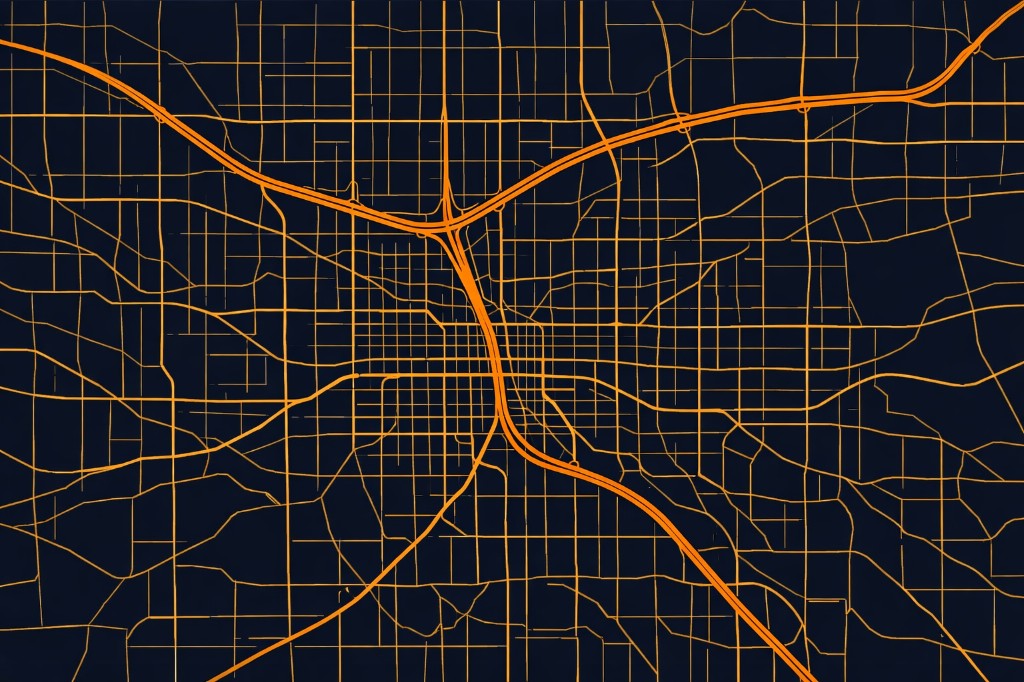
A live map of where workers actually are, not where they were assigned to be at the morning briefing.
For every connected worker, real-time location data gives storm response supervisors something they almost never have during a deployment: a live map of where workers actually are, not where they were assigned to be at the morning briefing.
Three Things Your Storm Response Safety Plan Must Address
1. Worker identification and onboarding for mutual aid crews
When workers arrive from an out-of-state utility, your safety system needs to recognize them, track them, and alert on their status the same way it does for your own employees. If your current system cannot bring a visiting worker into the safety workflow as part of arrival check-in, that is a gap worth closing before the next deployment, not during one.
2. A defined protocol for lost connectivity
Pretending the network will hold is not a plan. Your storm response plan should state exactly what happens when a crew's devices drop offline: who is notified when connection-lost monitoring flags a worker, how long a crew may remain dark before a welfare response starts, and what the response looks like given the last known location. Deciding those thresholds in a conference room in June beats improvising them in a debris field at 2 a.m.
3. Alert response workflows designed for storm conditions
An emergency event fired at 2 a.m. during active restoration means something different than the same alert during a routine daytime job. Storm response safety plans should define exactly what triggers a welfare check, who initiates it, and what the escalation path looks like when no response is received within a defined window.
What Happens When Mutual Aid Safety Programs Are Not Ready
The operational and human cost of a preventable fatality during storm response is severe. The reputational cost for a utility that mobilized mutual aid workers and could not account for their safety is lasting. The regulatory and litigation exposure from an incident during a high-visibility restoration event is significant.
The Navigator platform was designed specifically for the conditions where field visibility breaks down: degraded communications, unfamiliar terrain, crews from multiple organizations, and operations running around the clock.
The question for storm response safety leaders is not whether this technology works in hard conditions. The question is whether your current program gives you any visibility into your crews when the conditions they are working in have already disabled everything else.
What Mutual Aid Coordinators Ask Before a Deployment
Storm restoration creates a convergence of hazards: mutual aid crews working in unfamiliar territory, degraded communications infrastructure, fatigue from extended shifts, and multi-contractor coordination without shared safety oversight. The highest-risk period is typically the first 48 hours, when crews are placed based on need rather than familiarity and communications have not yet been restored.
With a workflow designed and rehearsed before storm season, mutual aid workers can be assigned a Compass Pro device, paired through the Navigator mobile app, and added to the host utility's responder groups as part of arrival check-in. The key is building and rehearsing that workflow before storm season, not during mobilization. Organizations that document the onboarding process consistently achieve faster deployment readiness than those configuring it on the fly.
Navigator manages workers and responder groups at the group and company level, so a host utility can bring visiting workers into its emergency response workflow for the duration of the deployment, with the host utility's responders receiving their alerts. Permissions, alert routing, and data handling should be agreed on between the participating organizations before deployment, ideally codified in the mutual aid memorandum of understanding. Your Safeguard representative will walk through the configuration.
Emergency history logs in Navigator are exportable, which supports incident review and audit after the deployment. How that history is retained and shared between the host and home utilities should be agreed on before storm season. Your Safeguard representative will walk through the data-handling questions your legal team will want answered before the mutual aid memorandum is signed.
Two layers. First, the device's hazard detection runs on the device itself, so the worker's voltage and current alerts keep working with no network at all, and the device shows its own connection status: a green flash every two seconds means connected with network, white means partial or none. Second, Navigator's connection-lost monitoring flags any worker whose device drops offline for more than three minutes, with their last known location, so the response to a dark crew starts in minutes instead of hours. For deployments in known coverage-blackout zones, build the response window into the plan and talk to your Safeguard representative during storm-readiness planning.